Truck Outline Icon: A Versatile Asset for Modern Design
Understanding the Visual Style and Appeal
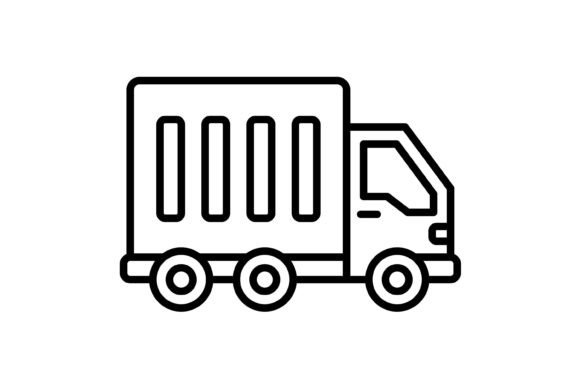
When you first encounter the Truck Outline Icon, you immediately notice its clean, minimalist aesthetic. This isn't a bulky, filled-in graphic; it's a carefully crafted line drawing that conveys the essence of a truck with economy and precision. The icon uses consistent, thin strokes to create a recognizable silhouette, focusing on essential details like the cab, cargo area, and wheels without unnecessary ornamentation. Its personality is one of clarity and efficiency—qualities that resonate in today's design landscape where simplicity often cuts through visual noise. The overall appeal lies in its neutrality and modernity; it doesn't scream for attention but rather communicates its message with quiet confidence, making it a flexible component for a wide array of projects.
The strength of this particular design asset is its inherent scalability and adaptability. Because it's built on a 100% vector foundation, you can scale the Truck Outline Icon from the size of a postage stamp on a business card to a massive billboard without a hint of pixelation or loss of quality. This vector nature is the cornerstone of its professional utility. Whether you're working in Adobe Illustrator to fine-tune the paths or importing the SVG file directly into a web codebase, the icon maintains its crisp, sharp edges. For anyone involved in logo design or creating brand identity guidelines, this level of precision is non-negotiable. It ensures that the visual representation of logistics, delivery, or transportation remains consistent across every touchpoint, from a mobile app interface to printed shipping labels.
Practical Applications Across Creative and Commercial Projects
Where does a Truck Outline Icon truly shine? Its utility spans a remarkable range of contexts. For web design and mobile app development, it's invaluable. Imagine an e-commerce checkout page where you need to indicate shipping options. Using this icon next to "Standard Delivery" or "Express Shipping" provides an instant, language-agnostic visual cue that improves user experience. Similarly, in a logistics management dashboard, a series of these icons can represent different fleet statuses. Its transparent background (PNG format) allows it to sit perfectly over any color scheme or pattern, ensuring seamless integration into complex layouts. This makes it a go-to resource for UI/UX designers who need reliable, ready-to-use graphics.
Beyond the digital realm, this icon proves its worth in print and physical media. Consider a small business owner creating packaging for their products. Incorporating the Truck Outline Icon onto a box or mailer subtly reinforces the brand's focus on delivery and service. For presentation slides, using it in a slide discussing supply chain logistics can visually anchor the point, making the information more digestible for the audience. Content creators and bloggers can use it in infographics about the history of freight or in social media graphics promoting a sale with free shipping. The key here is its role as a supporting visual element that enhances comprehension without overwhelming the core message. It works best when its function is clear—to symbolize movement, transport, or delivery.
Integrating the Icon into Your Design Workflow
Choosing the right icon for a project involves more than just picking something that looks nice. With the Truck Outline Icon, you should evaluate its fit based on your project's visual language. If your brand employs a sans serif font and a modern, clean aesthetic, this icon will integrate naturally. Its linear quality pairs well with contemporary typography and minimalist layouts. However, if your project calls for a more ornate or vintage feel, you might need to consider how this stark outline interacts with more decorative elements. A practical step is to test the icon in context. Place it next to your chosen typefaces, in your color palette, and within your layout grid. Does it feel balanced? Does it scale appropriately relative to your text? These are crucial readability considerations.
The file formats included—AI, EPS, JPG, PNG, SVG—are designed for maximum usability across platforms. The AI and EPS files are perfect for designers who need full editability in vector software. You can adjust stroke weights, modify paths, or change colors to match specific brand guidelines. The SVG format is ideal for web developers, as it's lightweight and scales perfectly for responsive design. The JPG and PNG files are quick solutions for those who need a raster image, with the PNG's transparent background being particularly useful for layering. This variety ensures that whether you're a hobbyist crafting a personal project or a marketer creating assets for a campaign, you have the right tool for the job. Always check the licensing for commercial use; a reputable asset like this typically comes with a license that permits use in both personal and commercial projects, but it's a responsible practice to verify.
Ultimately, the Truck Outline Icon is more than just a picture of a vehicle. It's a functional piece of visual communication. Its power lies in its clarity, scalability, and versatility. By understanding its characteristics and thoughtfully applying it within your projects—whether for social media graphics, editorial design, or packaging design—you can leverage it to create more effective and professional-looking work. It's a small but significant element that contributes to a cohesive visual narrative, helping to guide your audience's eye and reinforce your message with understated efficiency.