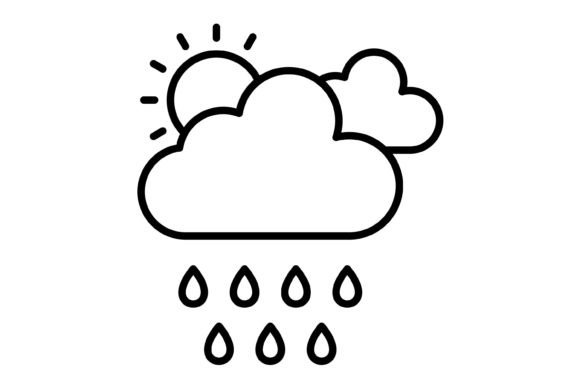
Rainy Day Outline Icon: Versatile Weather Graphics
When you are designing a digital interface or a marketing brochure, the details matter. You might have the perfect copy and a solid layout, but the wrong visual asset can throw the whole project off balance. That is where a versatile set like the Rainy Day Outline Icon comes into play. It is not just a picture of a cloud; it is a functional piece of design infrastructure meant to communicate "weather" instantly without cluttering your visual hierarchy.
Visual Style and Aesthetic Appeal
At first glance, you will notice that the Rainy Day Outline Icon follows a clean, linear aesthetic. This is a modern typography approach applied to imagery. Instead of heavy, filled shapes that can weigh down a minimalist layout, these outlines offer a lighter touch. They work exceptionally well in "light mode" user interfaces but hold their own against dark backgrounds when inverted. The lines are consistent, ensuring that whether you place this icon next to a sans serif font or a geometric display font, it feels like it belongs there. It strikes a balance between being recognizable and abstract enough to fit into various brand identity systems.
The personality of the Rainy Day Outline Icon is professional yet approachable. It avoids the cartoonish look of some clip art, making it suitable for serious financial dashboards that display market fluctuations (using weather metaphors) as well as friendly travel blogs. It is designed for maximum usability, meaning it scales well. You can use it as a tiny favicon in a browser tab or blow it up for a presentation slide, and the vector quality remains crisp.
Practical Applications for Creators and Brands
For the entrepreneur or small business owner, this icon set is a practical addition to your toolkit. Consider a boutique hotel website. You might use the Rainy Day Outline Icon next to a forecast widget to help guests pack appropriately. In packaging design, a skincare brand might use it to suggest that a product is weather-resistant or hydrating for cold, damp days. The visual shorthand saves space on labels where real estate is expensive.
Content creators and bloggers will find it useful for social media graphics. If you are posting about "cozy rainy day reads" or "stormy weather fashion," a high-quality icon elevates the post from a simple photo to a designed graphic. Because the files are provided in formats like PNG with a transparent background and SVG, you can easily drop them into Canva, Adobe Illustrator, or Figma without worrying about messy white boxes around the image.
Technical Versatility: File Formats and Editing
The value of design assets often lies in their flexibility. The package includes five different formats: AI, EPS, JPG, PNG, and SVG. Here is why that matters for your workflow:
- SVG (Scalable Vector Graphics): This is the gold standard for web design. SVGs are code-based, meaning they load fast and look perfect on any screen resolution, from a standard monitor to a 4K mobile display. They are also easy to animate with CSS if you want the rain drops to move.
- AI and EPS: These are for the professional designers using Adobe Illustrator. If you need to change the stroke weight of the Rainy Day Outline Icon to match a specific serif font you are using, or if you want to combine it with other shapes to create a complex logo, these vector files give you total control.
- PNG: Great for quick use. If you are a crafter making a digital planner or a marketer building a slide deck, the transparent background allows for seamless layering.
- JPG: Best for situations where file size matters and transparency isn't needed, such as email headers.
Integrating Icons into Your Design Strategy
Using an icon effectively requires more than just pasting it onto a page. It needs to integrate with your modern typography choices. For example, if you are designing a weather app, you want the icon's line weight to harmonize with your text weight. If your primary body text is a light sans-serif, a very thick, bold icon might look jarring. The Rainy Day Outline Icon is designed to be neutral enough to adapt, but always check the visual balance.
Think about visual hierarchy. An icon should support the message, not scream for attention. Use it as a bullet point for a list of features, or as a divider between sections. In editorial design, such as a magazine layout, using a high-quality outline icon can break up long blocks of text, making the page feel more breathable and easier to read.
Final Thoughts on Utility
Ultimately, the Rainy Day Outline Icon is about solving communication problems efficiently. It is a premium font asset's visual cousin—a tool that ensures your project looks polished. Whether you are building a mobile app, designing a presentation, or creating templates for sale, having reliable, scalable, and editable vector icons on hand is a smart move. It saves you time hunting for stock imagery and ensures that your visual language remains consistent across all platforms.